Custom Search

Friday, May 16, 2008

Ian Paice


Ian Paice (born June 29, 1948)
Deep Purple’s drummer since he joined the band (age 19) in 1968. Armed with a dazzlingly fast technique, Ian has also worked with Paice, Ashton & Lord, Gary Moore and Whitesnake.
A recent highlight was guesting on Sir Paul McCartney’s ‘Run Devil Run’ (1999) rock’n’roll album. Steve Morse says about Ian Paice: “He’s like a real heavy Ringo. He’s just so good on the drums, but doesn’t want to make a big deal about it.”
Ian has also just released a new solo DVD which is aimed at drummers and music fans alike.

Steve Morse


Steve Morse (born July 28, 1954, Hamilton, Ohio, USA)
Superb guitarist and bandleader in his own right, Steve went to Miami University to study classical and jazz guitar. He formed The Dixie Dregs in 1975 with bassist Andy West. Between 1982 and 1986, readers of ‘Guitar Player’ magazine voted Steve Morse ‘Best Guitarist’ for five years in a row. He formed The Steve Morse Band in 1983 and joined Kansas before switching careers to become an airline pilot.
Drawn back to music, he joined Deep Purple as lead guitarist in 1994, although he maintains his own recording band.
“It’s so much fun for me to play with the guys in Purple.Ian Gillan, apart from being a great singer, is also a master of the English language. He can manipulate words and pluck double entendres out of nowhere! What I most enjoy in life is working with excellent musicians. That’s why I get so enthusiastic about working with Deep Purple.”

Roger Glover


Roger Glover (born Brecon, Wales, November 30 1945)
The bass player and composer, joined Deep Purple from Episode Six in 1969, then left to become head of A&R at Purple Records. He wrote the ‘The Butterfly Ball’ (1974) concept album which yielded the hit song ‘Love is All’ sung by Ronnie James Dio.
He worked as a producer with such bands as Nazareth and Status Quo, as well as working with Ian Gillan on their album ‘Accidentally On Purpose’ (1988). Roger played with Ritchie Blackmore’s Rainbow (1979-1984) before returning to Deep Purple in 1984.
"The last eight years have been especially enjoyable. It is such a joy to be in the band now. After Steve joined it reawakened in me that feeling of why I was in the band in the first place. It’s like a great big adventure. That’s the way it was in the beginning and then, of course, politics and personalities, success and money get in the way of the fun. For a while it became a job or a bore. The last eight years have been the exact opposite. It’s back to the fun it was in the first place, which is a wonderful thing!”

Ian Gillan


Ian Gillan (born Hounslow, Middlesex, August 19, 1945)
Ian joined Deep Purple from Episode Six in 1969. His first Purple album appearance was on ‘Concerto for Group and Orchestra’ but Gillan made his greatest vocal impact on ‘In Rock’, ‘Fireball’ and ‘Machine Head’. The band’s most famous anthem ‘Smoke On The Water’ emphasises his ability to deliver a lyric with smouldering intensity and rock’n’roll exuberance.
Gillan led his own band during the late Seventies before rejoining Deep Purple for ‘Perfect Strangers’ in 1984. In 1989 he toured as Garth Rockett before releasing further solo albums including ‘Naked Thunder’ (1990), ‘Toolbox’ (1991) and Dreamcatcher (1998).
Ian is presently working on several projects, both as a writer and vocalist, with a book under construction and a new solo album taking shape.

Don Airey


Don Airey (born in Sunderland, England)
Has been a player on the rock scene for over 25 years, notching up almost 200 album credits and associations with 20 or more major bands including Cozy Powell’s Hammer, Colosseum II, Andrew Lloyd Webber, Ritchie Blackmore’s Rainbow, Ozzy Osbourne, Whitesnake, Jethro Tull and ELO.
From 1992-95, Don’s involvement in the music scene was sporadic, due to his older son’s serious illness, but since has been continually occupied recording, producing or touring with a multitude of artists including Tony Iommi, Glenn Hughes, Ten, Uli Jon Roth, Judas Priest, Silver, opera singer Mark Rattray, Gary Barden, Michael Schenker, UFO, Graham Bonnet and, last but not least, Deep Purple.
Don came to Purple’s rescue mid 2001 to help out for an injured Jon Lord, who has since retired, with Don recording the new album with Deep Purple as the band’s permanent keyboard player.
"The thought crossed my mind a few years ago 'If Jon retired...?.... Naaaah ....... They'd never ask me'. So when he did and they did, I jumped at the chance and it exceeded my expectations from the first number I played with them, Woman from Tokyo, at the Skanderborg Festival in 2001. Touring Russia and the US last year was a highlight and recording a new album with the band in Royaltone Studios LA, January 2003, the sort of experience I thought I'd said goobye to years ago - Long may it continue!"

Deep Purple History


Purple ProseDeep Purple has surrendered to the ‘Rapture’; now it’s your turnBy Jeff Miers
The first time I heard Deep Purple – or perhaps felt Deep Purple is a better way to describe the experience – it was the mid-70s. I was 8, and Ritchie Blackmore’s sinewy, sinister riffing on the “Made In Japan” version of “Child In Time,” coupled with Ian Gillan’s dramatic, gorgeous howling, Jon Lord’s ominous neo-classical Hammond organ, and the dynamic interplay of the Roger Glover-Ian Paice rhythm section, tore the top of my head off.
It was unlike anything else I’d ever heard. And it quite literally changed my life.
30 years later, I’m still hearing Deep Purple for the first time.
“Rapture of the Deep” is the spot-on moniker for the disc you hold in your hands, and I’ll stand on any classic rock radio programmer’s desk in my cowboy boots and scream it loud, proud and Gillan-esque; “This is the best Deep Purple album there is, dammit! Forget ‘Machine Head’ – that was then; this is most decidedly now!”
This is the fourth record created by the revamped and rejuvenated Purple following the umpteenth departure of the mercurial Mr. Blackmore. The guitarist – one of the most significant in British rock history - had ceased to be a contributing force and was in fact draining Purple of its collective spirit when his ship finally set sail for good, a bit over a decade back.
Blackmore's exit is, in a sense, where our story begins, for the surviving band members left to pick up the pieces in his violent wake – Gillan, Glover, Lord, Paice – agreed unanimously on only one six-stringer, the soon to be knighted Steve Morse. Hardly scraping the dregs from the bottom of the barrel with that choice, boys.
Morse accepted, writing commenced for what would become “Purpendicular,” on-stage work-outs were seized upon with relish, and the band breathed the heady air of rebirth. When “Purpendicular” was delivered, it astonished. Rather than going softly into the long goodnight of “classic rock” middle-age, Deep Purple had reinvented itself. It took no more than a cursory listen to the likes of “Ted the Mechanic,” "Loosen My Strings” and “Sometimes I Feel Like Screaming” to drive this point straight into the skull.
Morse brought a funkiness, a depth as guitarist and writer, an unparalleled fluidity as a soloist, a startling aptitude as foil to Lord, and an arsenal of influences – country, folk, jazz, what they’ve sadly labeled “fusion,” and an inherent understanding of blues-based riffs – that meshed effortlessly with the immaculate Glover-Paice sense of swing and Gillan’s seeming capacity to go anywhere at any time, full-throated and eyes ablaze.
”Purpendicular” was a celebration of both remembrance and reinvention. It at once acknowledged Purple’s estimable history and tradition, and a musical wanderlust not content to repeat the past. As such, it laid the template for a new Purple. And it all, it seems, was paving the way for the mighty metamorphosis that is “Rapture of the Deep.”
With Morse, Purple toured the world to accolades from the cognoscente. “Abandon” cemented the band’s on-stage prowess on record, and reminded us that Purple was, yes indeed, the heaviest of heavy rock bands. “Bananas,” the first record following Lord’s retirement from touring and his replacement by exquisite ivory-tinkler Don Airey, brought elements of pop to the table, grafted on some of “Purpendicular’s” ambition, and encapsulated the ensemble-riff power of “Abandon.” Tours behind both of these albums revealed this still-young band’s continued growth as a performing unit. By the end of the "Bananas" marathon, Airey had marked his apotheosis, from "replacement" to fully-integrated band-member.
”Rapture of the Deep” marks yet another new beginning, however. And it, more than any other record this side of “Perfect Strangers” and “Purpendicular,” offers a snapshot of the band transitioning into bold, uncharted territory. It’s as if all the pieces fit, not for the first time, of course, but in a manner that reveals a more pure portrait of just what this band is capable of. The whole transcends the sum of its parts, which is fitting for a record that seems to be, in a very real sense, about transcendence.
”As we all know, it’s hard to breathe/When something spiritual has taken place/We don’t know how, we don’t know why/We’ve been transported to a state of grace,” sings Gillan during the album’s title track, and this verse can be seen as indicative of the over-arching ethos behind “Rapture of the Deep.” Lyrically, it speaks of a spirit not content with the status quo in terms of interpersonal, social and political relationships, and this irreverent yearning is matched by the searching nature of the music itself, which also refuses to be ordinary.
The album opens with “Money Talks,” a hook-heavy rocker with several twists in its tale, most notably Gillan’s harmony vocals during the chorus, his uber-hip sing-speak during the verses – recalling both “Fireball’s” “No One Came” and his own “No Laughing In Heaven” – and the manner in which the tune flirts with an Eastern modality before erupting into a searing Morse solo. “Wrong Man” slaps the listener in the face straight out of the gate with a strutting riff that can’t miss, as Glover and Paice exploit the pocket for all it’s worth, and Gillan kicks against the pricks in the voice of a character whose greatest crime seems to be having been in the wrong place at the wrong time. Both of these – like their siblings on “Rapture,” elegant and refined rockers steeped in blues and chomping at the bit, with names like “Back To Back,” “Girls Like That” and the hit single in waiting “Don’t Let Go” – are brilliant Purple tunes, estuaries from a river that never seems to run too dry. Ah, but the surprises… they’re many and varied here, and they elevate “Rapture” toward the rapturous upper echelons of the Purple canon.
“Before Time Began” takes the form of a threatening march, an abscess dying to burst. Paice offers a dark subterranean shuffle, as the band lays down a series of melancholic chords, and Gillan, in a voice drenched in pathos, bemoans a world in which “Every day of my life I discover/Someone murdering my sisters and brothers/In the name of some god or another.” No mere political polemic, this, however; Gillan’s touch is too light, and he’s a master of “leaving things out,” so that his lyric is suggestive, rather than mere vitriol. “All of those bad ideas became the law/And we’ve forgotten what we’re looking for.” Indeed.
And again, the Purple engine room is in full overdrive mode here, as an expansive call-and-response between Morse and Airey - who has made replacing Lord look easy, when we all know it is in fact far from it; Airey has made his mark on Purple, to be sure, by respecting what came before him and having the fortitude and chops to take it all somewhere new and exciting - leaves one feeling breathless and vulnerable. This is “progressive rock” in the most positive sense of that much-maligned term.
The centerpiece of “Rapture” also happens to be one of the finest tunes in the band’s history – no small claim, that. “Clearly Quite Absurd” is clearly quite sublime; a piece with a melody that simply hurts to listen to, in the way that first love is painful because it’s ephemeral and fleeting. Thankfully, your disc player has a “repeat” button, so this is a love that will never abandon you.
Gillan sings of escaping the snares of the mundane and commonplace, the accepted reality which deadens us to the potential one above and beyond it. Again, harmony vocals – Beatle-esque ones, in this instance – help set the mood, and an ascending chord progression led by Morse spreads its arms heavenward, eventually settling into a circular pattern that becomes one of the more moving codas not just in Purple history, but, yep, in the history of heavy rock itself.
This is Deep Purple, 2005 version. Intense, fearless, full of fire, and wit, and passion. Marked by serious virtuosity, but never a slave to it. Still finding new meaning in a medium they all but single-handedly created. Grab ahold of this, and don’t let go.

Wednesday, May 14, 2008

Tours


Deep Purple are considered to be one of the hardest touring bands in the world.[19] [20] [21] From 1968 until today they continue to tour around the world on all 6 continents. In 2007 they received special award for selling more than 150 000 tickets in France with 40 dates in the country in 2007 alone.[22] In 2007, Purple's Rapture of the Deep Tour were voted #6 concert tour of the year (in all music genres) by Planet Rock listeners.[23]. Rolling Stones's A Bigger Bang Tour was voted #5 and beat Purple's tour with only 1%. Deep Purple is due to release new live compilation DVD box, Around The World Live, in May 2008.


  • Deep Purple Debut Tour, 1968
  • Shades of Deep Purple Tour, 1968
  • The Book of Taliesyn Tour, 1968
  • Deep Purple UK Tour 1969, 1969
  • Deep Purple North American Tour 1969, 1969
  • Deep Purple Uk Tour 1969 #2, 1969
  • In Rock Tour, 1970-1971
  • Fireball Tour, 1971-1972
  • Machine Head Tour, 1972-1973
  • Deep Purple European Tour 1974
  • Burn Tour, 1974
  • Stormbringer Tour, 1974
  • Come Taste The Band Tour, 1975-1976
  • Perfect Strangers Tour, 1984-1985
  • The House of Blue Light Tour, 1987-1988
  • Slaves And Masters Tour, 1991
  • Deep Purple 25 Years Anniversary Tour, also called as The Battle Rages On Tour, 1993
  • Deep Purple and Joe Satriani Tour, 1993-1994
  • Deep Purple North American Tour 1994, 1994-1995
  • Deep Purple Korean, South African and Indian Tour, 1995
  • Purpendicular Tour, 1996-1997
  • A Band On Tour, 1998-1999
  • Concerto Tour, 2000-2001
  • Deep Purple World Tour, 2001-2003
  • Bananas Tour, 2003-2005
  • Rapture of the Deep Tour, 2006-2008
  • Deep Purple 40 Years Anniversary Tour, 2008

Sunday, May 4, 2008

(1994–present) Revival with Steve Morse


Steve Morse's arrival revitalised the band creatively, and in 1996 a new album titled Purpendicular was released, showing a wide variety of musical styles. With a revamped set list to tour, Deep Purple enjoyed success throughout the rest of the 1990s, releasing the harder-sounding Abandon in 1998, and touring with renewed enthusiasm. In 1999, Jon Lord, with the help of a fan who was also a musicologist and composer, painstakingly recreated the Concerto for Group and Orchestra; the original score having been lost. It was once again performed at the Royal Albert Hall in September 1999, this time with the London Symphony Orchestra conducted by Paul Mann. The concert also featured songs from each member's solo careers, as well as a short Deep Purple set, and the occasion was commemorated on the 2000 album Live at the Royal Albert Hall. In early 2001, two similar concerts were performed in Tokyo and released as part of the box set The Soundboard Series.

Much of the next few years was spent on the road touring. The group continued forward until 2002, when founding member Jon Lord (who, along with Ian Paice, was the only member to be in all incarnations of the band) announced his amicable retirement from the band to pursue personal projects (especially orchestral work). Rock keyboard veteran Don Airey (Rainbow/Ozzy Osbourne), who had helped Deep Purple out when Lord's knee was injured in 2001, joined the band. In 2003, Deep Purple released their first studio album in five years, working with new producer Michael Bradford, the highly praised (but controversially titled) Bananas, and began touring in support of the album immediately. In July 2005, the band played at the Live 8 concert in Park Place (Barrie, Ontario) and, in October of the same year, released their next album Rapture of the Deep. It was followed by the Rapture of the Deep tour.

In February 2007, Ian Gillan asked fans not to buy a live album being released by Sony BMG. This was a recording of their 1993 appearance at the NEC in Birmingham. Recordings of this show have previously been released without resistance from Gillan or any other members of the band, but he said: "It was one of the lowest points of my life - all of our lives, actually."[18]

(1984–1994) Reunions and breakups

In April 1984, eight years after the demise of Deep Purple, a full-scale (and legal) reunion took place with the "classic" early 70s line-up of Blackmore, Gillan, Glover, Lord and Paice. The album Perfect Strangers was released in October 1984. A solid release, it sold extremely well and included the singles and concert staples "Knockin' At Your Back Door" and "Perfect Strangers". The reunion tour followed, starting in Australia and wending its way across the world to the USA, then into Europe by the following summer. Financially, the tour was also a tremendous success. The UK homecoming proved limited, as they elected to play just a single festival show at Knebworth (with main support from the Scorpions). The weather was bad, but 80,000 turned up anyway.

The line-up then released The House of Blue Light in 1987, which was followed by a world tour (interrupted after Blackmore broke a finger on stage) and another live album Nobody's Perfect (1988) which was culled from several shows on this tour, but still largely based around the by-now familiar Made in Japan set-list. In the UK a new version of "Hush" was released to mark 20 years of the band. In 1989, Ian Gillan was fired as his relations with Blackmore had again soured and their musical differences had widened too far. His replacement was former Rainbow vocalist Joe Lynn Turner. This line-up recorded just one album, Slaves & Masters (1990) and toured in support. It is one of Blackmore's favourite Purple albums, though some fans derided it as little more than a so called Deep Rainbow album.

With the tour done, Turner was forced out, as Lord, Paice and Glover (and the record company) wanted Gillan back in the fold for the 25th anniversary. Blackmore grudgingly relented and the classic line-up recorded The Battle Rages On, but tensions between Gillan and Blackmore came to a head yet again during an otherwise stunningly successful European tour. Blackmore walked out in November 1993, never to return. Joe Satriani was drafted in to complete the Japanese dates in December and stayed on for a European Summer tour in 1994. He was asked to join permanently, but his record contract commitments prevented this. The band unanimously chose Dixie Dregs/Kansas guitarist Steve Morse to become Blackmore's permanent successor.

(1976–1984) Band split, side projects


The end came on tour in Britain in March 1976 at the Liverpool Empire Theatre. David Coverdale reportedly walked off in tears and handed in his resignation, to which he was allegedly told there was no band left to quit. The decision to disband Purple had been made some time before the last show by Lord and Paice (the last remaining original members), who hadn't told anyone else. The break-up was finally made public in July 1976.

Later, Bolin had just finished recording his second solo album, Private Eyes, when, on December 4, 1976, tragedy struck. In Miami, during a tour supporting Jeff Beck, Bolin was found unconscious by his girlfriend. Unable to wake him, she hurriedly called paramedics, but it was too late. The official cause of death: multiple-drug intoxication. He was 25 years old.

After the break-up most of the past and present members of Deep Purple went on to have considerable success in a number of other bands, including Rainbow, Whitesnake, Black Sabbath and Gillan. There were, however, a number of promoter-led attempts to get the band to reform, especially with the revival of the hard rock market in the late 70s/early 80s. By 1980, an unauthorised version of the band surfaced with Rod Evans as the only member who had ever been in Deep Purple, eventually ending in successful legal action from the legitimate Deep Purple camp over unauthorised use of the name. Evans was ordered to pay damages of $672,000 for using the band name without permission.[17]

(1970–1976) Popularity and breakup


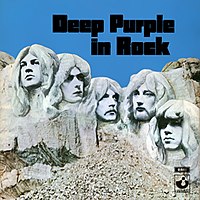
Shortly after the orchestral release, the band began a hectic touring and recording schedule that was to see little respite for the next three years. Their first studio album of this period, released in mid-1970, was Deep Purple in Rock (a name deliberately chosen to distance the rock album from the concerto) and contained the then-concert staples "Speed King", "Into The Fire", and "Child in Time". The band also issued the UK Top Ten single "Black Night". Blackmore's and Lord's guitar-keyboard interplay coupled with Ian Gillan's howling vocals and the rhythm section of Glover and Paice now started to take on a unique identity and become instantly recognisable to rock fans throughout Europe.

A second album, the more mellow and creatively progressive Fireball (a favourite of Gillan but not of the rest of the band), was issued in the summer of 1971. The title track "Fireball" was released as a single, as was "Strange Kind of Woman" - not from the album but recorded during the same sessions (although it was included on the US version of the album in lieu of the UK version's song Demon's Eye.)

Within weeks of Fireball's release, the band was already performing songs planned for the next album. One song (which later became "Highway Star") was performed at the first gig of the Fireball tour, having been written on the bus to a show in Portsmouth, in answer to a journalist's question: "How do you go about writing songs?" Three months later, in December 1971, the band traveled to Switzerland to record Machine Head. The album was due to be recorded at a casino in Montreux, using the Rolling Stones Mobile Studio, but a fire during a Frank Zappa and the Mothers of Invention gig burned down the casino. The album was actually recorded at the nearby empty Grand Hotel. This incident famously inspired the song "Smoke on the Water". Gillan believes that he witnessed a man fire a flare gun into the ceiling during the concert, prompting Zappa to comment: "Arthur Brown in person!"

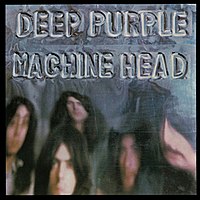
Continuing from where both previous albums left off, Machine Head has since become one of the band's most famous albums, including tracks that became live classics such as "Highway Star", "Space Truckin'", "Lazy", and "Smoke on the Water." Deep Purple continued to tour and record at a rate that would be rare thirty years on: when Machine Head was recorded, the group had only been together three and a half years, yet it was their seventh LP. Meanwhile the band undertook four US tours in 1972 and the August tour of Japan that led to a double-vinyl live release, Made in Japan. Originally intended as a Japan-only record, its world-wide release saw the double become an instant hit. It remains one of rock music's most popular and highest selling live-concert recordings (although at the time it was perhaps seen as less important, as only Glover and Paice turned up to mix it).

The classic Purple Mk 2 line-up continued to work and released the album Who Do We Think We Are (1973), featuring the hit single "Woman from Tokyo", but internal tensions and exhaustion were more noticeable than ever. The bad feelings culminated in Ian Gillan quitting the band after their second tour of Japan in the summer of 1973, and Roger Glover being pushed out with him. Their replacements were an unknown singer from Saltburn in North East England, David Coverdale, and Midlands bassist/vocalist Glenn Hughes, formerly of Trapeze. According to the liner notes for the 30th anniversary edition of Burn, after first acquiring Glenn Hughes, they debated continuing as a four piece with Hughes as both bassist and vocalist.This new line-up continued into 1974 with the heavier blues-rock album Burn, another highly successful release and world tour. Hughes and Coverdale added both vocal harmonies and a more funky element to the band's music, a sound that was even more apparent on the late 1974 release Stormbringer. Besides the title track, the album had a number of songs that received much radio play, such as "Lady Double Dealer", "The Gypsy", and "Soldier Of Fortune". Yet Blackmore voiced unhappiness with the album, and as a result left the band in the spring of 1975 to form his own band with Ronnie James Dio of Elf, called Ritchie Blackmore's Rainbow, then shortened after one album to Rainbow.

With Blackmore's departure, Deep Purple was left to fill one of the biggest bandmember vacancies in rock music. In spite of this, the rest of the band refused to stop, and to the surprise of many long-time fans, actually announced a replacement for the "irreplaceable" Man in Black; American Tommy Bolin.

There are at least two versions about the recruitment of Bolin: according to the liner notes in the Deep Purple 4-CD boxed set it was Coverdale who had suggested auditioning Bolin. "He walked in, thin as a rake, his hair coloured green, yellow, and blue with feathers in it. Slinking along beside him was this stunning Hawaiian girl in a crochet dress with nothing on underneath. He plugged into four Marshall 100-watt stacks and . . .the job was his." But in an interview originally published by Melody Maker in June 1975 and available at the Deep Purple Appreciation Society's (DPAS) website, Bolin himself claimed that he came to the audition following a recommendation from Ritchie Blackmore [1]. Bolin had been a member of many now-forgotten mid-60s bands - Denny & The Triumphs, American Standard, and Zephyr, which released three albums from '69-72. Before Purple, Bolin's best-known recordings were made as a session musician on Billy Cobham's 1973 jazz fusion album, Spectrum, and on The James Gang's Bang (1973) and Miami (1974). He had also jammed with such luminaries as Dr. John, Albert King, and Alphonse Mouzon and was busy working on his first solo album, Teaser, when he accepted the invitation to join Deep Purple.

The resulting album, Come Taste the Band, was released in October 1975. Despite mixed reviews, the collection revitalised the band once again, bringing a new, extreme funk edge to their hard rock sound. Bolin's influence was crucial, and with encouragement from Glenn Hughes and David Coverdale, the guitarist developed much of the material. Later, Bolin's personal problems with drugs began to manifest themselves, and after cancelled shows and below-par concert performances, the band was in danger.

(1968–1970) Breakthrough

In October 1968, the group had success with a cover of Joe South's "Hush", which reached #4. The song was taken from their debut album Shades of Deep Purple, and they were booked to support Cream on their Goodbye tour.

The band's second album, The Book of Taliesyn (including a cover of Neil Diamond's Kentucky Woman), was released in the United States to coincide with this tour, although it would not be released in their home country until the following year. 1969 saw the release of their third album, Deep Purple, which contained strings and woodwind on one track ("April"). Several influences were in evidence, notably Vanilla Fudge and Lord's classical antecedents such as Bach and Rimsky-Korsakov.

After these three albums and extensive touring in the States, their American record company, Tetragrammaton, went out of business, leaving the band with no money and an uncertain future. (Tetragrammaton's assets were assumed by Warner Bros. Records, who would release Deep Purple's records in the U.S. throughout the 1970's.) Returning to England in early 1969, they recorded a single called "Emmaretta", named for a cast member of the musical Hair, whom Rod Evans was trying to seduce, before Evans and Simper were fired.

The band hunted down singer Ian Gillan from Episode Six, a band that had released several singles in the UK without achieving their big break for commercial success. Six's drummer Mick Underwood - an old comrade of Blackmore's from his Savages days - made the introductions, and bassist Roger Glover tagged along for the initial sessions. Purple persuaded Glover to join full-time; an act that effectively killed Episode Six and gave Underwood a guilt complex that lasted nearly a decade - until Gillan recruited him for his new post-Purple band in the late 1970s.

This created the quintessential Deep Purple "Mark 2" lineup, whose first, inauspicious release was a Greenaway-Cook tune titled "Hallelujah", which flopped.

The band gained some much-needed publicity with the Concerto for Group and Orchestra, a three-movement epic composed by Lord as a solo project and performed by the band at the Royal Albert Hall with the Royal Philharmonic Orchestra, conducted by Malcolm Arnold. Together with Five Bridges by The Nice, it was one of the first collaborations between a rock band and an orchestra, although at the time, certain members of Purple (Blackmore and Gillan especially) were less than happy at the group being tagged as "a group who played with orchestras" when actually what they had in mind was to develop the band into a much tighter, hard-rocking style. Despite this, Lord wrote and the band recorded the Gemini Suite, another orchestra/group collaboration in the same vein, in late 1970.

(1964–1968) Pre-Deep Purple years

n 1967, former Searchers drummer Chris Curtis contacted London businessman Tony Edwards in the hope that he would manage a new group he was putting together, to be called Roundabout: so-called because the members would get on and off the band, like a musical roundabout. Impressed with the plan, Edwards agreed to finance the venture with two business partners: John Coletta and Ron Hire (Hire-Edwards-Coletta - HEC Enterprises).

The first recruit was the classically-trained Hammond organ player Jon Lord, who had most notably played with The Artwoods (led by Art Wood, brother of future Rolling Stones guitarist Ronnie Wood, and featuring Keef Hartley). He was followed by session guitarist Ritchie Blackmore who was persuaded to return from Hamburg to audition for the new group. Curtis soon dropped out, but HEC Enterprises, as well as Lord and Blackmore, were keen to carry on.

For the bass guitar, Lord suggested his old friend Nick Simper, with whom he had played in a band called The Flower Pot Men and their Garden (formerly known as The Ivy League) back in 1967. Simper's claims to fame (apart from Purple) were that he had been in Johnny Kidd & The Pirates and had been in the car crash that killed Kidd. He was also in Screaming Lord Sutch's The Savages, where he played with Blackmore.

The line-up was completed by singer Rod Evans and drummer Ian Paice from The Maze. After a brief tour of Denmark in the spring of 1968, Blackmore suggested a new name: Deep Purple, which was his grandmother's favourite song.

Deep Purple

Deep Purple
In 2004, from left to right, Roger Glover, Ian Paice, Ian Gillan, Don Airey and Steve Morse
Background information
Origin Hertfordshire, England
Genre(s) Hard rock, heavy metal[1][2][3], blues-rock
Years active 1968 – 1976
1984 – present
Label(s) Edel, EMI, BMG, Polydor, Warner Bros., Tetragrammaton, Aquarius
Associated acts Rainbow, Whitesnake, Gillan, Black Sabbath, Blackmore's Night, Tommy Bolin, Episode Six, Screaming Lord Sutch, Dixie Dregs
Website www.deeppurple.com
Members
Ian Gillan
Steve Morse
Roger Glover
Don Airey
Ian Paice
Former members
Ritchie Blackmore
Jon Lord
Rod Evans
Nick Simper
David Coverdale
Glenn Hughes
Joe Lynn Turner
Joe Satriani
Tommy Bolin

Deep Purple are an English hard rock band formed in Hertfordshire in 1968.[4] Along with Led Zeppelin and Black Sabbath, they are considered to be among the pioneers of heavy metal and modern hard rock,[5] although the members of the band have always refused to label themselves as heavy metal[6]. The band has also incorporated pop and progressive rock elements [5]. It was once listed by the Guinness Book of World Records as the world's loudest band,[5][7][8] and it has sold over 100 million albums worldwide.[9][10][11][12] Deep Purple was ranked #22 on VH1's Greatest Artists of Hard Rock program.[13]

The band has gone through many line-up changes and an eight-year hiatus. The 1968-76 line-ups are commonly labelled Mark I, II, III and IV. [14][15] Their second and most commercially successful line-up featured: Ian Gillan (vocals), Ritchie Blackmore (guitar), Jon Lord (keyboards), Roger Glover (bass guitar) and Ian Paice (drums).[8] This line-up was revived from 1984-89 and again in 1993 before the rift between Blackmore and other members became unbridgeable. The current line-up including guitarist Steve Morse has been much more stable, though Lord's retirement in 2002 has left Paice as the only original member.[16]

Deep Purple

Deep Purple adalah kelompok hard rock Inggris yang dianggap sebagai salah satu pelopor musik heavy metal bersama dengan Led Zeppelin dan Black Sabbath.

Cikal bakal Deep Purple merupakan kreasi dari Jon Lord yang sebelumnya bermain untuk The Flowerpot Man bersama rekan pemusik lainnya, Chris Curtis, dan seorang pengusaha yang mencoba menjadi produser musik, Tony Edwards. Pada Bulan Desember 1967, Curtis merekrut Ritchie Blackmore yang ketika itu sedang mencoba nasib di Jerman bersama Neil Christian And The Crusaders.

Sebelum di Jerman, Blackmore pernah bergabung dengan The Outlaws dan Screaming Lord Sutch And The Savages. Lagu "The Address" dan "Mandrake Root" ditulis pada pertemuan pertama Blackmore dan Lord. Tak lama kemudian bergabung pula rekan pemetik bas Lord di The Flowerpot Man, Nick Simper. Untuk mengisi posisi vokalis serta penabuh drum, Lord dan Blackmore merekrut Rod Evans dan Ian Paice. Setelah sempat menamakan diri sebagai Roundabout, bulan Maret 1968 mereka resmi menjadi Deep Purple.

Sebelum memutuskan nama Deep Purple Nama nama lain yang sempay di usulkan sebagai nama band adalah "Orpheus", "Concrete God", juga nama "Sugarlump". Pada suatu pagi, Ritchie mengusulkan nama "Deep Purple" karena itu nama lagu favorit neneknya, yang cukup populer pada tahun 1920-an dan menjadi hit kelompok Nino Tempo And April Steven tahun 1963.

Pada tahun 1969, nasib Simper dan Evans didepak secara tiba-tiba oleh Blackmore, Lord, dan Paice. Richtie keluar-masuk pub untuk mencari pengganti. Akhirnya, dia terkesan dengan dua personel Episode Six, Ian Gillan serta Roger Glover.