Custom Search

Friday, June 20, 2008

Song catalogue

In 1963 Lennon and McCartney agreed to assign their song publishing rights to Northern Songs, a company created by music publisher Dick James.[116] The company was administered by James' own company Dick James Music. Northern Songs went public in 1965, with Lennon and McCartney each holding 15% of the company's shares Dick James and the company's chairman, Charles Silver, held a controlling 37.5%. In 1969, following a failed attempt by Lennon and McCartney to buy the company, James and Silver sold Northern Songs to British TV company Associated TeleVision (ATV), from which Lennon and McCartney received stock.

In 1985, after a short period in which the parent company was owned by Australian business magnate Robert Holmes à Court, ATV Music was sold to Michael Jackson for a reported $47 million[117] (trumping a joint bid by McCartney and Yoko Ono), including the publishing rights to over 200 songs composed by Lennon and McCartney.

A decade later Jackson and Sony merged its music publishing businesses.[117] Since 1995, Jackson and Sony/ATV Music Publishing have jointly owned most of the Lennon-McCartney songs recorded by The Beatles. Meanwhile, Lennon's estate and McCartney still receive their respective songwriter shares of the royalties. (Despite his ownership of most of the Lennon-McCartney publishing, Jackson has only recorded one Lennon-McCartney composition himself, "Come Together" which was featured in his film Moonwalker and HIStory album)

Although the Jackson-Sony catalogue includes most of The Beatles' greatest hits, four of their earliest songs had been published by one of EMI's publishing companies prior to Lennon and McCartney signing with Dick James — and McCartney later succeeded in personally acquiring the publishing rights to "Love Me Do", "Please Please Me", "P.S. I Love You" and "Ask Me Why" from EMI.

Harrison and Starr did not renew their songwriting contracts with Northern Songs in 1968, signing with Apple Publishing instead. Harrison later created Harrisongs, which still owns the rights to his post-1967 songs such as "While My Guitar Gently Weeps" and "Something". Starr also created his own company, called Startling Music. It holds the rights to his two post-1967 songs recorded by The Beatles, "Don't Pass Me By" and "Octopus's Garden".

The Beatles are one of the few major artists who have not released their recorded catalogue through online music services (for example, iTunes and Napster). Apple Corp's dispute with Apple, Inc. (the owners of iTunes) over the use of the name "Apple" has played a particular part in this. An uneasy truce between the two companies broke when Apple Computers opened the iTunes Store, after which Apple Corp sued Apple, Inc. This was resolved in February 2007, with Apple Computer owning the Apple name but licensing it back to Apple Records. Following the resolution, several solo albums by Lennon and McCartney were released to the iTunes Music Store. As of November 2007, all of the band members' solo catalogues have been released on iTunes.

Studio albums

  • Please Please Me (Parlophone, 1963)
  • With the Beatles (Parlophone, 1963)
  • A Hard Day's Night (Parlophone, 1964)
  • Beatles for Sale (Parlophone, 1964)
  • Help! (Parlophone, 1965)
  • Rubber Soul (Parlophone, 1965)
  • Revolver (Parlophone, 1966)
  • Sgt. Pepper's Lonely Hearts Club Band (Parlophone, 1967)
  • Magical Mystery Tour (U.S. only. Released as a Double EP in the UK) (Capitol, 1967)
  • The Beatles ("The White Album") (Apple, 1968)
  • Yellow Submarine (Apple, 1969)
  • Abbey Road (Apple, 1969)
  • Let It Be (Apple, 1970)

CD releases

In 1987, EMI released all of The Beatles' studio albums on CD worldwide. Apple Corps decided to standardize The Beatles catalogue throughout the world. They chose to release the twelve original studio albums as released in the United Kingdom, as well as the Magical Mystery Tour U.S. album, which had been released as a shorter Double EP in the UK. All of the remaining Beatles material from the singles and EPs from 1962–1970 which had not been issued on the original British studio albums were gathered on the Past Masters double album compilation:

  • Past Masters, Volume One (1988)
  • Past Masters, Volume Two (1988)

The U.S. album configurations from 1964-65 were released as box sets in 2004 and 2006 (The Capitol Albums Volume 1 and Volume 2 respectively); these included both stereo and mono versions based on the mixes that were prepared for vinyl at the time of their original 1960s releases in the United States.

Recreational drug use

In Hamburg, The Beatles used "prellies" (Preludin) both recreationally and to maintain their energy through all-night performances.[110] McCartney would usually take one, but Lennon would often take four or five.[110] Bob Dylan introduced them to cannabis during a 1964 visit to New York.[111] McCartney remembered them all getting "very high" and giggling.[112] The Beatles occasionally smoked a joint in the car on the way to the studio during the filming of Help!, which often made them forget their lines.[113]

In April 1965, Lennon and Harrison were introduced to LSD by an acquaintance, dentist John Riley, who slipped some into their coffees.[114] Lennon in particular became an avid "tripper", claiming in a 1970 interview in Rolling Stone to have taken LSD hundreds of times. McCartney was more reluctant to try the drug, but finally did so in 1966 and was the first Beatle to talk about it in the press, saying in June 1967 that he took it four times.

The Beatles added their names to an advertisement in The Times, on 24 July 1967, which asked for the legalisation of cannabis, the release of all prisoners imprisoned because of possession, and research into marijuana's medical uses. The advertisement was sponsored by a group called Soma, and was signed by 65 people, including Brian Epstein, Graham Greene, R.D. Laing, 15 doctors, and two MPs.

Radio

The arrival of The Beatles is seen in radio as a touchstone in music signalling an end to the rock-and-roll era of the 1950s. Program Directors like Rick Sklar of WABC in New York went as far as forbidding DJs from playing any "pre-Beatles" music.

Achievements

  • The Beatles are the world's best-selling musical group of all time, selling over a billion records worldwide. [106]
  • The Beatles have had more number one albums (15) than any other group in UK chart history.[107]
  • The Beatles broke television ratings records in the U.S. with their first appearance on The Ed Sullivan Show with over 73 million people viewing.

On film

The Beatles appeared in several films, all of which featured associated soundtrack albums. The band played themselves in two films directed by Richard Lester, A Hard Day's Night (1964) and Help! (1965). The group produced and starred in the hour-long television movie Magical Mystery Tour (1967), while the documentary Let It Be (released 1970) followed the rehearsals and recording sessions for the early 1969 Get Back project and won the Academy Award in 1971 for Best Original Song Score. In addition, the psychedelic animated film Yellow Submarine (1968) followed the adventures of a cartoon version of the band; the members did not provide their own voices, appearing only in a brief live-action epilogue.

During 1965-1969, the Beatles were the subject of a Saturday morning cartoon series, The Beatles, which loosely continued the kind of slapstick antics of A Hard Day's Night. Two Beatles songs were played in each half-hour show, with the Beatles' cartoon counterparts "lip-synching" the actual Beatles recordings. Some of the song performances, such as those from A Hard Day's Night, appeared to have been rotoscoped. The regular speaking voices of the characters were not supplied by the Beatles themselves, but rather by voice artists Paul Frees and Lance Percival.

Musical evolution

The Beatles' constant demands to create new sounds on every new recording, combined with George Martin's arranging abilities and the studio expertise of EMI staff engineers such as Norman Smith, Ken Townsend and Geoff Emerick, all played significant parts in the innovative sounds of the albums Rubber Soul (1965), Revolver (1966) and Sgt. Pepper's Lonely Hearts Club Band (1967).

The Beatles continued to absorb influences long after their initial success, often finding new musical and lyrical avenues by listening to their contemporaries. Among those influences were Bob Dylan, who influenced songs such as "You've Got to Hide Your Love Away" and "Norwegian Wood (This Bird Has Flown)".[citation needed] Other contemporary influences included the Byrds and the Beach Boys, whose album Pet Sounds was a favourite of McCartney's.[101] Beatles producer George Martin stated that "Without Pet Sounds, Sgt. Pepper wouldn't have happened... Pepper was an attempt to equal Pet Sounds."[102] After Sgt. Pepper was released, Beach Boys' leader Brian Wilson was so despondent that he went to bed for months.[103] Lennon also named Elvis Presley as a spark that interested himself in music:

It was Elvis who really got me buying records. I thought that early stuff of his was great. The Bill Haley era passed me by, in a way. When his records came on the wireless, my mother used to hear them, but they didn’t do anything for me. It was Elvis who got me hooked on beat music. When I heard 'Heartbreak Hotel', I thought ‘this is it’ and I started to grow sideboards and all that gear...."[104]

Along with studio tricks such as sound effects, unconventional microphone placements, tape loops, double tracking and vari-speed recording, The Beatles began to augment their recordings with instruments that were unconventional for rock music at the time. These included string and brass ensembles as well as Indian instruments such as the sitar as in "Norwegian Wood (This Bird Has Flown)" and the swarmandel as in "Strawberry Fields Forever". They also used early electronic instruments such as the Mellotron, with which McCartney supplied the flute voices on the intro to "Strawberry Fields Forever", and the ondioline, an electronic keyboard that created the unusual oboe-like sound on "Baby You're a Rich Man".

Beginning with the use of a string quartet (arranged by George Martin with input from McCartney) on "Yesterday" in 1965, The Beatles pioneered a modern form of art song, exemplified by the double-quartet string arrangement on "Eleanor Rigby" (1966), "Here, There and Everywhere" (1966) and "She's Leaving Home" (1967). A televised performance of Bach's Brandenburg Concerto No. 2 directly inspired McCartney's use of a piccolo trumpet on the arrangement of "Penny Lane". The Beatles moved towards psychedelia with "Rain" and "Tomorrow Never Knows" from 1966, and "Lucy in the Sky with Diamonds", "Strawberry Fields Forever" and "I Am the Walrus" from 1967

1970–present: Post-breakup


Shortly before and after the official dissolution of the group, all four Beatles released solo albums. Some of their albums featured contributions by other former Beatles; Starr's Ringo (1973) was the only one to include compositions and performances by all four, albeit on separate songs. Harrison showed his socio-political consciousness and earned respect for his contribution for arranging the Concert For Bangladesh in New York City in August 1971 along with sitar maestro Ravi Shankar. Other than an unreleased jam session in 1974 (later bootlegged as A Toot and a Snore in '74), Lennon and McCartney never recorded together again.

In the wake of the expiration in 1975 of The Beatles' contract with EMI-Capitol, the American Capitol label, rushing to cash in on its vast Beatles holdings and freed from the group's creative control, released five LPs: Rock 'n' Roll Music (a compilation of their more uptempo numbers), The Beatles at the Hollywood Bowl (containing portions of two unreleased shows at the Hollywood Bowl), Love Songs (a compilation of their slower numbers), Rarities (a compilation of tracks that either had never been released in the U.S. or had gone out of print), and Reel Music (a compilation of songs from their films). There was also a non-Capitol-EMI release entitled Live! at the Star-Club in Hamburg, Germany; 1962, which was a recording of a show from the group's early days at the Star Club in Hamburg captured on a poor-quality tape. Of all these post-breakup LPs, only the Hollywood Bowl LP had the approval of the group members. Upon the American release of the original British CDs in 1986, these post-breakup Capitol American compilation LPs were deleted from the Capitol catalogue.

John Lennon was shot and killed by Mark David Chapman on 8 December 1980 in New York City. In May 1981, George Harrison released "All Those Years Ago"; a single written about Harrison's time with The Beatles. It was recorded the month before Lennon's death, with Starr on drums, and was later overdubbed with new lyrics as a tribute to Lennon. Paul and Linda McCartney later contributed backing vocals to the track.[97]

In 1988, The Beatles were inducted into the Rock and Roll Hall of Fame during their first year of eligibility.[98] On the night of their induction, Harrison and Starr appeared to accept their award along with Lennon's widow Yoko Ono and his two sons. McCartney stayed away, issuing a press release citing "unresolved difficulties" with Harrison, Starr and Lennon's estate.

In February 1994, the three surviving Beatles reunited to produce and record additional music for a few of Lennon's home recordings. "Free as a Bird" premiered as part of The Beatles Anthology series of television documentaries and was released as a single in December 1995, with "Real Love" following in March 1996. These songs were also included in the three Anthology collections of CDs released in 1995 and 1996, each of which consisted of two CDs of never-before-released Beatles material. Klaus Voormann, who had known The Beatles since their Hamburg days and had previously illustrated the Revolver album cover, directed the Anthology cover concept. 450,000 copies of Anthology 1 were sold on its first day of release. In 2000, the compilation album 1 was released, containing almost every number-one single released by the band from 1962 to 1970. The collection sold 3.6 million copies in its first week (selling 3 copies a second) and more than 12 million in three weeks worldwide. The collection also reached number one in the United States and 33 other countries, and had sold 25 million copies by 2005 (about the ninth best selling album of all time).

In the late 1990s, George Harrison was diagnosed with lung cancer. He succumbed to the disease on 29 November 2001.

In 2006, George Martin and his son Giles Martin remixed original Beatles recordings to create a soundtrack to accompany Cirque du Soleil's theatrical production Love. In 2007, McCartney and Starr reunited for an interview on Larry King Live to discuss their thoughts on the show. Beatles widows Yoko Ono and Olivia Harrison also appeared with McCartney and Starr in Las Vegas for the one-year anniversary of Love.

Also in 2007, reports circulated[99] that McCartney was hoping to complete "Now and Then", the third Lennon track the band worked on during the Anthology sessions, as a "Lennon/McCartney composition" by writing new verses, laying down a new drum track recorded by Starr, and utilizing archival recordings of Harrison's guitar work.

Lawyers for The Beatles sued on March 21, 2008 to prevent the distribution of unreleased recordings purportedly made during Ringo Starr's first performance with the group in 1962. The dispute between Apple Corps Ltd. and Fuego Entertainment Inc. of Miami Lakes stems from recordings apparently made during a performance at the Star Club in Hamburg, Germany

1969–70: Let It Be project and breakup

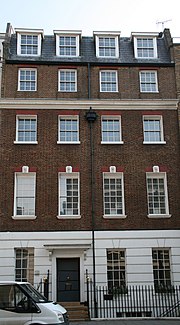
In January 1969, The Beatles began a film project documenting the making of their next record, originally titled Get Back. During the recording sessions, the band undertook their final live performance on the rooftop of the Apple building at 3 Savile Row, London, on 30 January 1969. Most of the performance was filmed and later included in the film Let It Be. The project was temporarily shelved, and The Beatles recorded their final album, Abbey Road, in the summer of 1969. The completion of the song "I Want You (She's So Heavy)" for the album on 20 August 1969 was the last time all four Beatles were together in the same studio. Lennon announced his departure to the rest of the group on 20 September 1969, but agreed that no announcement was to be publicly made until a number of legal matters were resolved. Their final new song was Harrison's "I Me Mine", recorded 3 January 1970 and released on the Let It Be album. It was recorded without Lennon, who was in Denmark at the time.[94]

In March 1970, the Get Back session tapes were given to American producer Phil Spector, who had produced Lennon's solo single "Instant Karma!". Spector's Wall of Sound production values went against the original intent of the record, which had been to record a stripped-down live performance. McCartney was deeply dissatisfied with Spector's treatment of "The Long and Winding Road" and unsuccessfully attempted to halt release of Spector's version of the song. McCartney publicly announced the break-up on 10 April 1970, a week before releasing his first solo album, McCartney. Pre-release copies included a press release with a self-written interview explaining the end of The Beatles and his hopes for the future.[95] On 8 May 1970 the Spector-produced version of Get Back was released as Let It Be, followed by the documentary film of the same name. The Beatles' partnership wasn't dissolved until 1975.

1966–69: Studio years

In April 1966, the group began recording what would be their most ambitious album to date, Revolver.[citation needed] During the recording sessions for the album, tape looping and early sampling were introduced in a complex mix of ballad, R&B, soul, and world music. The Beatles performed their last concert before paying fans at Candlestick Park in San Francisco on 29 August 1966.[79][86] McCartney asked Tony Barrow to tape the event, but the 30-minute tape he used ran out halfway through the last song.[87] From then on, The Beatles concentrated on recording. Less than seven months after recording Revolver, The Beatles returned to Abbey Road Studios on 24 November 1966 to begin the 129-day recording sessions for their eighth album, Sgt. Pepper's Lonely Hearts Club Band, released on 1 June 1967.

On 25 June 1967, The Beatles became the first band globally transmitted on television, before an estimated 400 million people worldwide.[citation needed] The band appeared in a segment within the first-ever worldwide television satellite hook-up, a show titled Our World. The Beatles were transmitted live from Abbey Road Studios, and their new song "All You Need Is Love" was recorded live during the show, albeit to the accompaniment of a backing track they had spent five days recording and mixing in the studio prior to the broadcast.[88]

On 24 August 1967, The Beatles met the Maharishi Mahesh Yogi at the London Hilton. A few days later they went to Bangor, in North Wales, to attend a weekend 'initiation' conference.[89] There, the Maharishi gave each of them a mantra.[90] While in Bangor, The Beatles learned of the death of Brian Epstein at age 32 from an accidental prescription drug overdose. At the end of 1967, they received their first major negative press in the UK with disparaging reviews of their surrealistic TV film Magical Mystery Tour.[91] Part of the criticism arose because colour was an integral part of the film, yet the film was shown on Boxing Day in black and white. The Magical Mystery Tour film soundtrack, was released in the United Kingdom as a double EP, and in the United States as a full LP (the LP is now the official version).

The group spent the early part of 1968 in Rishikesh, Uttar Pradesh, India, studying transcendental meditation with the Maharishi Mahesh Yogi.[92] Their time at the Maharishi's ashram was highly productive from a musical standpoint, as many of the songs that would later be recorded for The Beatles (White Album) and Abbey Road were composed there by Lennon, McCartney, and Harrison.[92] Upon their return, Lennon and McCartney went to New York to announce the formation of Apple Corps. The middle of 1968 saw the band busy recording the double album The Beatles, popularly known as The White Album because of its plain white cover. These sessions saw deep divisions opening within the band, with Starr temporarily leaving the band. The band carried on, with McCartney recording the drums on the songs "Martha My Dear", "Wild Honey Pie", "Dear Prudence" and "Back in the USSR". Among the other causes of dissension were that Lennon's new girlfriend, Yoko Ono, was at his side through almost all of the sessions, and that the others felt that McCartney was becoming too dominant.[93] Internal divisions had been a small but growing problem in the band; most notably, this was reflected in the difficulty that Harrison experienced in getting his songs onto The Beatles albums.

On the business side, McCartney wanted Lee Eastman, the father of his then-girlfriend Linda Eastman, to manage The Beatles, but the other members wanted New York manager Allen Klein. All past Beatles decisions had been unanimous, but this time the four could not agree. Lennon, Harrison and Starr felt the Eastmans would put McCartney's interests before those of the group. In 1971, it was discovered that Klein, who had been appointed manager, had stolen £5 million from The Beatles' holdings. Years later, during the Anthology interviews, McCartney said, "Looking back, I can understand why they would feel that he Lee Eastman was biased for me and against them.

1966: Backlash and controversy

In July 1966, when The Beatles toured the Philippines, they unintentionally snubbed the nation's first lady, Imelda Marcos, who had expected the group to attend a breakfast reception at the Presidential Palace.[71] When presented with the invitation, Brian Epstein politely declined on behalf of the group, as it had never been the group's policy to accept such "official" invitations.[72] The group soon found that the Marcos regime was unaccustomed to accepting "no" for an answer. After the snub was broadcast on Philippine television and radio, all of The Beatles' police protection disappeared. The group and their entourage had to make their way to Manila airport on their own. At the airport, road manager Mal Evans was beaten and kicked, and the band members were pushed and jostled about by a hostile crowd.[73] Once the group boarded the plane, Epstein and Evans were ordered off, and Evans said, "Tell my wife that I love her."[74] Epstein was forced to give back all the money that the band had earned while they were there before being allowed back on the plane.[75]

Almost as soon as they returned from the Philippines, an earlier comment by Lennon made in March that year launched a backlash against The Beatles from religious and social conservatives in the United States. In an interview with British reporter Maureen Cleave,[76] Lennon had offered his opinion that Christianity was dying and that The Beatles were "more popular than Jesus now".[77] Afterwards, a radio station in Birmingham, Alabama, ran a story on burning Beatles records, in what was considered to be a joke. However, many people affiliated with rural churches in the American South started taking the suggestion seriously. Towns across the United States and South Africa started to burn Beatles records in protest. Attempting to make light of the incident, Harrison said, "They've got to buy them before they can burn them."[78] Under tremendous pressure from the American media, Lennon apologised for his remarks at a press conference in Chicago on 11 August 1966, the eve of the first performance of what turned out to be their final tour.[79]

The group's two-year series of Capitol compilations also took a strange twist in the United States when one of their publicity shots, used for a Yesterday and Today album and a poster promoting the UK release of "Paperback Writer", created an uproar, as it featured the band dressed in butchers' overalls, draped in meat and plastic dolls. A popular, though apocryphal, rumour said that this was meant as a response to the way Capitol had "butchered" their albums.[80] Thousands of copies of the album had a new cover pasted over. Years later, a commentator linked the cover shot with the group's interest in German expressionism.[79] Uncensored copies of Yesterday and Today command a high price today, with one copy selling for $10,500 at a December 2005 auction.[81]

Elvis Presley disapproved of The Beatles's anti-war activism and open use of drugs, later asking President Richard Nixon to ban all four members of the group from entering the United States. Peter Guralnick writes, "The Beatles, Elvis said, [...] had been a focal point for anti-Americanism. They had come to this country, made their money, then gone back to England where they fomented anti-American feeling."[82] Guralnick adds, "Presley indicated that he is of the opinion that The Beatles laid the groundwork for many of the problems we are having with young people by their filthy unkempt appearances and suggestive music while entertaining in this country during the early and middle 1960s."[83] Despite Presley's remarks, Lennon still had some positive feelings towards him: "Before Elvis, there was nothing."[84] In contrast, Bob Dylan recognised The Beatles' contribution, stating: "America should put up statues to The Beatles. They helped give this country's pride back to it

1964–66: Beatlemania crosses the Atlantic

On 7 February 1964, a crowd of four thousand fans at Heathrow Airport waved to The Beatles as they took off for their first trip to the United States as a group.[53] They were accompanied by photographers, journalists (including Maureen Cleave), and Phil Spector, who had booked himself on the same flight.[54] When the group arrived at New York's newly renamed John F. Kennedy Airport, they were greeted by a large crowd. The airport had never experienced such a crowd, estimated at about 3,000 fans.[55] After a press conference, where they first met disc jockey Murray the K, The Beatles were put into limousines and driven to New York City. On the way, McCartney turned on a radio and listened to a running commentary: "They [The Beatles] have just left the airport and are coming to New York City..."[56] After reaching the Plaza Hotel, they were besieged by fans and reporters. Harrison had a fever of 102 °F (39 °C) the next day and was ordered to stay in bed, so Neil Aspinall replaced him for the band's first for their appearance on The Ed Sullivan Show.[57]

The Beatles on The Ed Sullivan Show, 9 February 1964

The Beatles made their first live American television appearance on The Ed Sullivan Show on 9 February 1964. Approximately 74 million viewers—about half of the American population—watched the group perform on the show.[58] The next morning, many newspapers wrote that The Beatles were nothing more than a "fad", and "could not carry a tune across the Atlantic".[59] The band's first American concert appearance was at Washington Coliseum in Washington, D.C. on 11 February 1964.[60]

After The Beatles' success in 1964, Vee-Jay Records and Swan Records took advantage of their previously secured rights to the group's early recordings and reissued the songs; all the songs reached the top ten this time. (MGM and Atco also secured rights to The Beatles' early Tony Sheridan-era recordings and had minor hits with "My Bonnie" and "Ain't She Sweet", the latter featuring John Lennon on lead vocal.) In addition to Introducing... The Beatles (1964), which was essentially The Beatles' debut British album with some minor alterations, Vee-Jay also issued an unusual LP called The Beatles Vs The Four Seasons. This 2-LP set paired Introducing... The Beatles and The Golden Hits Of The Four Seasons, another successful act that Vee-Jay had under contract, in a 'contest' (the back cover featured a 'score card'). Another unusual release was the Hear The Beatles Tell All album, which consisted of two lengthy interviews with Los Angeles radio disc jockeys (side one was titled "Dave Hull interviews John Lennon", while side two was titled "Jim Steck interviews John, Paul, George, Ringo"). No Beatles music was included on this interview album, which turned out to be the only Vee-Jay Beatles album Capitol Records could not reclaim.

The Vee-Jay/Swan-issued recordings eventually ended up with Capitol, which issued most of the Vee-Jay material on the American-only Capitol release The Early Beatles, with three songs left off this final US version of the album. ("I Saw Her Standing There" was issued as the American B-side of "I Want to Hold Your Hand", and also appeared on the Capitol Records album Meet The Beatles. "Misery" and "There's a Place" were issued as a Capitol "Starline" reissue single in 1964, and reappeared on Capitol's 1980 US version of the Rarities compilation album.) The early Vee-Jay and Swan Beatles records command a high price on the record collectors' market today, and all have been copiously bootlegged.[61] The Swan tracks "She Loves You" and "I'll Get You" were issued on the Capitol LP The Beatles' Second Album. Swan also issued the German-language version of "She Loves You", called "Sie Liebt Dich". This song later appeared (in stereo) on Capitol's Rarities album.

In mid-1964 the band undertook their first appearances outside of Europe and North America, touring Australia; Ringo Starr was suffering from tonsillitis and was temporarily replaced by session drummer Jimmy Nicol. In Adelaide, The Beatles were greeted by over 300,000 people at Adelaide Town Hall.[62] Ringo had rejoined by the time they arrived in New Zealand on 21 June 1964

On 6 June 1964, A Hard Day's Night, the first movie starring the Beatles, was released in the United Kingdom. Directed by Richard Lester, the film is a mockumentary of the four members as they make their way to a London television programme. The film, released at the height of Beatlemania, was well-received by critics, and remains one of the most influential jukebox musicals.[64][65] That December the group released their fourth album, Beatles for Sale.

In June 1965, Her Majesty Queen Elizabeth II appointed the four Beatles Members of the Order of the British Empire, MBE. The band members were nominated by Prime Minister Harold Wilson, who also was the M.P. for Huyton, Liverpool.[66] The appointment–at that time primarily bestowed upon military veterans and civic leaders – sparked some conservative MBE recipients to return their insignia in protest.[67] The first two were returned on 14 June 1965, before The Beatles received theirs on 26 October.[68]

In July 1965, The Beatles's second feature film, Help!, was released. The film was accompanied by the band fifth British studio album Help!, which also functioned as the soundtrack for the movie. On 15 August 1965, The Beatles performed the first major stadium concert in the history of rock 'n' roll at Shea Stadium in New York to a crowd of 55,600.[69] Their sixth album, Rubber Soul, was released in early December 1965. It was hailed as a major leap forward in the maturity and complexity of the band's music

1963–64: American success

Although the band experienced huge popularity on the British record charts in early 1963, EMI's American operation, Capitol Records, declined to issue the singles "Please Please Me" and "From Me to You", their first official number one hit in the UK.[48] Vee-Jay Records, a small Chicago label, issued the singles as part of a deal for the rights to another performer's masters. Art Roberts, music director of popular Chicago radio station WLS, placed "Please Please Me" into radio rotation in late February 1963, arguably the first time a Beatles record was heard on American radio. Vee-Jay's rights to The Beatles were later cancelled for non-payment of royalties.[49]

In August 1963, Philadelphia-based Swan Records released "She Loves You", which also failed to receive airplay. A testing of the song on Dick Clark's TV show American Bandstand produced laughter from American teenagers when they saw the group's distinctive hairstyles.[50] In early November 1963, Brian Epstein persuaded Ed Sullivan to present The Beatles on three editions of his show in February, and parlayed this guaranteed exposure into a record deal with Capitol Records. Capitol committed to a mid-January release of "I Want to Hold Your Hand".[51] On 10 December 1963, a 5-minute story shot in England about the phenomenon of Beatlemania was shown on the CBS Evening News. The segment first aired on the CBS Morning News on 22 November and had originally been scheduled to be repeated on that day's Evening News, but regular programming was cancelled following the assassination of John F. Kennedy that day. The segment inspired a teenage girl named Marsha Albert living in Silver Spring, Maryland to write to Carroll James, a disc jockey at Washington DC's WWDC radio station, requesting that he play records by The Beatles. Carroll James had seen the same news story and arranged through a friend to have a copy of The Beatles' new single "I Want to Hold Your Hand" sent over to him in Washington DC. Immediately after debuting the record on December 17, the station received overwhelming positive audience reaction, with the station escalating airplay of the record. Made aware of the overwhelming listener response, Capitol Records president Alan Livingston decided a few days later to take advantage of the response and rush-release the already-prepared single three weeks ahead of schedule on 26 December 1963.[52]

Several New York radio stations—first WMCA, then WINS and WABC—began playing "I Want to Hold Your Hand" on its release day. The positive response to the record that had started in Washington was duplicated in New York and quickly spread to other markets. The record sold one million copies in just ten days, and by 16 January 1964, Cashbox magazine had certified the record number one, in the edition datelined 23 January. Aware that The Ed Sullivan Show was scheduled to present The Beatles live in early February, the Jack Paar Show licensed a film clip of The Beatles performing "She Loves You" from Britain's BBC and aired the footage on 3 January 1964, enabling Paar to claim that he had beaten rival Sullivan to showing The Beatles on a network TV show.

1962–63: Fame in the UK

On 26 November 1962 the band recorded their second single "Please Please Me", which reached number two on the official UK charts and number one on the NME chart. Three months later, they recorded their first album, also titled Please Please Me (1962). The band's first televised performance was on the People and Places programme, transmitted live from Manchester by Granada Television on 17 October 1962.[45] As The Beatles' fame spread, the frenzied adulation of the group, predominantly from teenage female fans, was dubbed "Beatlemania".

The band also began to be noticed by serious music critics. On 23 December 1963, The Times music critic William Mann published an essay extolling The Beatles' compositions, including their "fresh and euphonious" guitars in "Till There Was You", their "submediant switches from C major into A flat major", and the "octave ascent" in "I Want to Hold Your Hand".[46] The Beatles themselves were perplexed by this analysis by Mann: "...one gets the impression that they think simultaneously of harmony and melody, so firmly are the major tonic sevenths and ninths built into their tunes, and the flat-submediant key-switches, so natural is the Aeolian cadence at the end of 'Not a Second Time' (the chord progression which ends Mahler's 'Song of the Earth')."[47] In 1980, Lennon commented, "To this day I don't have any idea what Aeolian cadences are. They sound like exotic birds.

1962: Record contract

After failing to impress Decca Records, Epstein went to the HMV store on Oxford Street in London to transfer the Decca tapes to discs. There, recording engineer Jim Foy referred him to Sid Coleman, who ran EMI's publishing arm. When Coleman heard the demo tapes, he suggested taking the tapes to George Martin who, Coleman explained, "does comedy records" and headed the Parlophone label at EMI.[citation needed] Epstein eventually met with Martin, who signed the group to EMI on a one-year renewable contract.[34] The Beatles' first recording session was scheduled for 6 June 1962 at EMI's Abbey Road Studios in north London.[35] Martin had not been particularly impressed by the band's demo recordings, but he liked The Beatles' personalities when he met them.[36] He concluded that they had raw musical talent, but stated in later interviews that what made the difference for him was their wit and humour.[37]

Martin had a problem with Pete Best,[36] whom he criticised for not being able to keep time. Martin privately suggested to Epstein that the band use another drummer in the studio. There was speculation by some that Best's popularity with fans was another source of friction.[38] In addition, Epstein became exasperated with his refusal to adopt the distinctive hairstyle as part of the band's unified look. Best also had missed a number of engagements because of illness. The three founding members of the band enlisted Epstein to dismiss Best, which he did on 16 August 1962.[39] They asked Richard Starkey, known as Ringo Starr, to join the band; Starr was the drummer for one of the top Merseybeat groups, Rory Storm and the Hurricanes, and had performed occasionally with The Beatles in Hamburg.[40] The first recordings of Lennon, McCartney, Harrison, and Starr together were made as early as 15 October 1960, in a series of demonstration records privately recorded in Hamburg while acting as the backing group for singer Lu Walters.[41] Starr played on The Beatles' second EMI recording session on 4 September 1962, but Martin hired session drummer Andy White for their next session on 11 September.[42] White's only released performances were recordings of "Love Me Do" and "P.S. I Love You", found on The Beatles' first album.

George Martin previewing a song by McCartney and Lennon in 1963.

Their recording contract paid them one penny for each single sold, which was split amongst the four Beatles — one farthing per group member.[43] This royalty rate was reduced for singles sold outside the UK, for which they received half of one penny (again split between the whole band) per single. Martin said later that it was a "pretty awful" contract.[43]

The Beatles' first EMI session on 6 June 1962 did not yield any recordings considered worthy of release, but the September sessions a few months later produced a minor UK hit "Love Me Do", which peaked on the charts at number seventeen.[44] "Love Me Do" would reach the top of the U.S. singles chart over eighteen months later in May 1964

1960–62: Hamburg, Cavern Club and Brian Epstein


Finding themselves drummerless before their upcoming engagement in Hamburg, the group invited Pete Best to become their drummer on 12 August 1960. Best had played with The Blackjacks in The Casbah Coffee Club, owned by Pete's mother, Mona Best; a cellar club in West Derby, Liverpool, The Beatles played there and often visited.[17] Four days after hiring Best, the group left for Hamburg. The Beatles began playing in Hamburg at the Indra Club and moved to the Kaiserkeller in October 1960. They were required to play six or seven hours a night, seven nights a week. On 21 November 1960 Harrison was deported for having lied to the German authorities about his age.[18] A week later, having started a small fire at their living quarters while vacating it for more luxurious rooms, McCartney and Best were arrested, charged with arson, and deported.[19] Lennon followed the others to Liverpool in mid-December while Sutcliffe stayed behind in Hamburg with his new German fiancée Astrid Kirchherr. The reunited group played an engagement on 17 December 1960 at the Casbah Club, with Chas Newby substituting for Sutcliffe.[20]


The Indra Club, where The Beatles first played on arriving in Hamburg, as it appears today.

The Beatles returned to Hamburg in April 1961, performing at the "Top Ten Club". While playing at the Top Ten Club, they were recruited by singer Tony Sheridan to act as his backing band on a series of recordings for the German Polydor Records label,[21] produced by famed bandleader Bert Kaempfert.[22] Kaempfert signed the group to its own Polydor contract at the first session on 22 June 1961. On 31 October Polydor released the recording "My Bonnie (Mein Herz ist bei dir nur)", which appeared on the German charts under the name "Tony Sheridan and the Beat Brothers", a generic name used for whoever happened to be in Sheridan's backup band.[23] A few copies were also pressed under the Decca label for United States disc jockeys, as American Decca had a distribution deal with Polydor parent Deutsche Grammophon.[24] When the group returned to Liverpool, Sutcliffe stayed in Hamburg with Kirchherr.[25] McCartney took over bass duties.[26]

The band returned to Liverpool from Germany, and on Tuesday February 21, 1961 they made their first lunchtime appearance at The Cavern Club in Mathew Street. Their stage show had been through a lot of changes, and some in the audience thought they were watching a German band. From 1961 to 1962 The Beatles made 292 appearances at the club. On 9 November 1961, Brian Epstein, owner of the NEMS music store on Great Charlotte Street, saw the Beatles for the first time in the club.

In a meeting with the group at North End Music Store (NEMS) on 10 December 1961, Brian Epstein proposed the idea of managing the group.[27] The Beatles signed a five-year contract with Epstein on 24 January 1962.[28] Epstein led The Beatles' search for a British recording contract. Epstein had been manager of the record department at NEMS, an offshoot of his family's furniture store. He played on the status of NEMS as a major record dealer to gain access to producers and recording company executives. In a now-famous exchange, Decca Records A&R executive Dick Rowe turned Epstein down flat, informing him that "guitar groups are on the way out, Mr. Epstein."[29] (See The Decca audition.) While Epstein was negotiating with Decca, he also approached EMI marketing executive Ron White.[30] White, who was not himself a record producer, in turn contacted EMI producers Norrie Paramor, Walter Ridley, and Norman Newell; all of them declined to record The Beatles. White did not approach EMI's fourth staff producer—George Martin—who was on holiday at the time.[31] The Beatles returned to Hamburg from 13 April to 31 May 1962, where they performed at the opening of The Star Club.[32] Upon their arrival, they were informed of Sutcliffe's death from a brain hemorrhage.

History of BEATLES

1957–60: Formation

Main article: The Quarrymen

In March 1957, while attending Quarry Bank Grammar School in Liverpool, John Lennon formed a skiffle group called The Quarrymen.[3] Lennon met guitarist Paul McCartney at the Woolton Garden Fête, held at St. Peter's Church, on 6 July 1957; Lennon added him to the group a few days later.[4] On 6 February 1958 young guitarist George Harrison was invited to watch the group, playing under a variety of names, at Wilson Hall, Garston, Liverpool.[5] McCartney had become acquainted with Harrison on the morning bus ride to the Liverpool Institute, as they both lived in Speke. Despite Lennon's initial reluctance due to Harrison's young age, Harrison joined the Quarrymen as lead guitarist at McCartney's insistence after a rehearsal in March 1958.[6][7] Lennon and McCartney both played rhythm guitar during that period, and had a high turnover of drummers. Lennon's art school friend Stuart Sutcliffe joined on bass in January 1960.[8][9]

The Quarrymen went through a progression of names, including "Johnny and the Moondogs" and "Long John and The Beatles". Sutcliffe suggested the name "The Beetles" as a tribute to Buddy Holly and The Crickets. After a tour with Johnny Gentle in Scotland, the band changed their name to "The Beatles." Lennon's first wife Cynthia Lennon suggested that Lennon came up with the name The Beatles at a "brainstorming session over a beer-soaked table in the Renshaw Hall bar."[10] Lennon, who was well known for giving multiple versions of the same story, joked in a 1961 Mersey Beat magazine article that "It came in a vision — a man appeared on a flaming pie and said unto them, 'From this day on you are Beatles with an A'".[11] During an interview in 2001, McCartney took credit for the peculiar spelling of the name, saying that "John had the idea of calling us the Beetles; I said, 'How about the Beatles; you know, like the beat of the drum?' At the time, everyone was stoned enough to find it hilarious. It's funny how history is made."[12]

In May 1960, the then-Silver Beetles toured northeast Scotland as a back-up band with singer Johnny Gentle, whom the band had met an hour before their first gig.[8] McCartney referred to the tour as a great experience for the band.[13] For the tour, the often drummer-less group secured the services of Tommy Moore, who was considerably older than the others.[14] Moore left the band soon after the tour and went back to work in a bottling factory as a forklift truck driver.[15] Norman Chapman was the band's next drummer, but was called up for National Service a few weeks later. His departure posed a serious problem, for the group's unofficial manager, Allan Williams, had arranged for them to perform in clubs on the Reeperbahn in Hamburg, West Germany

The Beatles


The Beatles were a pop and rock group from Liverpool, England formed in 1960. Primarily consisting of John Lennon (rhythm guitar, vocals), Paul McCartney (bass guitar, vocals), George Harrison (lead guitar, vocals) and Ringo Starr (drums, vocals) throughout their career, The Beatles are recognised for leading the mid-1960s musical "British Invasion" into the United States. Although their initial musical style was rooted in 1950s rock and roll and homegrown skiffle, the group explored genres ranging from Tin Pan Alley to psychedelic rock. Their clothes, styles, and statements made them trend-setters, while their growing social awareness saw their influence extend into the social and cultural revolutions of the 1960s. After the band broke up in 1970, all four members embarked on solo careers.

The Beatles are one of the most commercially successful and critically acclaimed bands in the history of popular music. The Beatles are the best-selling musical group in history. In the United Kingdom, The Beatles released more than 40 different singles, albums, and EPs that reached number one, earning more number one albums (15) than any other group in UK chart history. This commercial success was repeated in many other countries; their record company, EMI, estimated that by 1985 they had sold over one billion records worldwide.[1] According to the Recording Industry Association of America, The Beatles have sold more albums in the United States than any other band.[2] In 2004, Rolling Stone magazine ranked The Beatles number one on its list of 100 Greatest Rock & Roll Artists of All Time. According to that same magazine, The Beatles' innovative music and cultural impact helped define the 1960s, and their influence on pop culture is still evident today.

Discography

Studio albums
  • Led Zeppelin (1969)
  • Led Zeppelin II (1969)
  • Led Zeppelin III (1970)
  • Led Zeppelin IV (1971)
  • Houses of the Holy (1973)
  • Physical Graffiti (1975)
  • Presence (1976)
  • In Through the Out Door (1979)
  • Coda (1982)
Filmography
  • The Song Remains the Same (1976)
  • Led Zeppelin (DVD) (2003)

Allegations of plagiarism

The credits for Led Zeppelin II were also the subject of debate after the album's release. The prelude to "Bring It On Home" is a cover of Sonny Boy Williamson's "Bring It On Home" and drew comparisons with Willie Dixon's "Bring It On Back". "Whole Lotta Love" (sample ) shared some lyrics with Dixon's "You Need Love/Woman You Need Love", though the riff from the song was an original Jimmy Page composition. In the 1970s, Arc Music, the publishing arm of Chess Records, brought a lawsuit against Led Zeppelin for copyright infringement over "Bring It On Home" and won an out-of-court settlement.[16] Dixon himself did not benefit until he sued Arc Music to recover his royalties and copyrights. Sixteen years later, Dixon filed suit against Led Zeppelin over "Whole Lotta Love" and an out-of-court settlement was reached.[81] Later pressings of Led Zeppelin II credit Dixon. Similarly, the "Lemon Song", from the same album, included an adaptation of Howlin' Wolf's "Killing Floor". The band and Chester Burnett reached an out-of-court settlement to give co-credit to the author of the original song.[82]

In an interview he gave to Guitar World magazine in 1993, Page commented on the band's use of classic blues songs:

[A]s far as my end of it goes, I always tried to bring some thing fresh to anything that I used. I always made sure to come up with some variation. In fact, I think in most cases, you would never know what the original source could be. Maybe not in every case -- but in most cases. So most of the comparisons rest on the lyrics. And Robert was supposed to change the lyrics, and he didn't always do that -- which is what brought on most of the grief. They couldn't get us on the guitar parts of the music, but they nailed us on the lyrics. We did, however, take some liberties, I must say [laughs]. But never mind; we did try to do the right thing.[83]

They were also accused of copying Bert Jansch's arrangement of "Blackwaterside" as "Black Mountain Side" without acknowledgement. Jansch says:

The accompaniment was nicked by a well-known member of one of the most famous rock bands, who used it, unchanged, on one of their records.

Songs of the band in other media

Members of Led Zeppelin have always been very protective of their repertoire, and have seldom allowed their works to be licensed for films or commercials. In recent years, their position has softened on the issue.

The songs of Led Zeppelin can be heard in movies such as One Day in September, School of Rock, Shrek the Third ("Immigrant Song" in all three), Dogtown and Z-Boys ("Achilles Last Stand", "Nobody's Fault but Mine", and "Hots On for Nowhere"), Almost Famous ("That's the Way", "The Rain Song", "Misty Mountain Hop", and "Tangerine"), Fast Times at Ridgemont High ("Kashmir"), and Small Soldiers ("Communication Breakdown"). The television series Supernatural featured the songs "In My Time of Dying" and "What Is and What Should Never Be", and One Tree Hill featured the song "Babe I'm Gonna Leave You". Also noteworthy is Cadillac's resurgent use of "Rock and Roll" in their US TV advertising campaign. Recently, Led Zeppelin have agreed to allow Apple to sell their music in Apple's iTunes Store, with the recently released greatest hits collection Mothership as the marquee offering.[80]

In April 2007 Hard Rock Park announced it had secured an agreement with the band to create "Led Zeppelin - The Ride" - a roller coaster built by B&M synchronised to the music of Led Zeppelin's Whole Lotta Love. The coaster will stand 155 feet (47 m) tall, feature six inversions, and spiral over a lagoon. It will be found in the "Rock and Roll Heaven" section of Hard Rock Park. As of 13 September 2007, the ride track is complete. The park conducted successful test runs in December.

Reunion (2007)


On 10 December 2007 the surviving members of Led Zeppelin reunited for a one-off benefit concert held in memory of music executive Ahmet Ertegün, with Jason Bonham filling in on drums. It was announced on 12 September 2007 by promoter Harvey Goldsmith in a press conference. The concert was to help raise money for the Ahmet Ertegün Education Fund, which pays for university scholarships in the UK, US and Turkey.

Music critics in attendance were unanimous in their praise for the band's performance. NME proclaimed, "What they have done here tonight is proof they can still perform to the level that originally earned them their legendary reputation...We can only hope this isn't the last we see of them."[72]. The concert sound was mixed by Metallica's FOH engineer Big Mick [73].

Page suggested the band may start work on new material,[74] and stated that a world tour may be in the works.[75] Meanwhile, Plant made his position regarding a reunion tour known to the Sunday Times, stating: "The whole idea of being on a cavalcade of merciless repetition is not what it's all about". However, he also made it known that he could be in favour of more one-off shows in the near future: "It wouldn't be such a bad idea to play together from time to time."

On 25 January 2008, in an interview during the half time of a basketball game at Madison Square Garden, Robert Plant was asked if Led Zeppelin would be seen back together again in the venue. He said "I don't know what is around the corner ... Right now my all energy is based on other projects".[76]

Three days later, at a press conference in Tokyo, Jimmy Page revealed that he is prepared to embark upon a world tour with Led Zeppelin, but due to Robert Plant's tour commitments with Alison Krauss, such plans will not be announced until at least September.[77]

On 17 May 2008, Canadian music station Much Music announced that Led Zeppelin plans to announce four August dates in Toronto, Ontario at the Rogers Centre. However the band's management has since denied the rumors. [78]

On 07 June 2008, Jimmy Page and John Paul Jones joined Foo Fighters frontman Dave Grohl and drummer Taylor Hawkins on stage at Wembley Stadium to perform Led Zeppelin tracks "Rock and Roll" (Hawkins on vocals and Grohl on drums), followed by "Ramble On" (Grohl on vocals and Hawkins on drums). Dave Grohl, formerly of Nirvana, has been a long time Led Zeppelin fan, telling the audience "welcome to the greatest day of my whole entire life

Post-Led Zeppelin (1980–present)

In 1982, the surviving members of the group released a collection of out-takes from various sessions during Led Zeppelin's career, entitled Coda. It included two tracks taken from the band's performance at the Royal Albert Hall in 1970, one each from the Led Zeppelin III and Houses of the Holy sessions, and three from the In Through the Out Door sessions. It also featured a 1976 John Bonham drum instrumental with electronic effects added by Jimmy Page, called "Bonzo's Montreux".

On 13 July 1985, Page, Plant and Jones reunited for the Live Aid concert at JFK Stadium, Philadelphia, for a short set featuring drummers Tony Thompson and Phil Collins and bassist Paul Martinez. Collins had played on Plant's first two solo albums. However, the performance was marred by the lack of rehearsal with the two drummers and Page's out-of-tune Les Paul (and heavy intoxication). Page himself had described the performance as "pretty shambolic."[62] When Live Aid footage was released on a four-DVD set in late 2004, the group unanimously agreed not to allow footage from their performance to be used, agreeing that it was not up to their standard.[63] However, to show their ongoing support Page and Plant pledged proceeds from their forthcoming Page and Plant DVD release to the campaign and John Paul Jones pledged the proceeds of his then-current U.S. tour with Mutual Admiration Society to the project.

The three members reunited again in May of 1988, for Atlantic Records' 40th Anniversary concert, with Bonham's son, Jason Bonham, on drums. However, the performance was widely criticized for being "flat" and for Page's poor guitar playing.[citation needed]

23 October 1990 saw the release of the "first Led Zeppelin box set", featuring tracks remastered under the personal supervision of Jimmy Page. This set also included four previously unreleased tracks, including the Robert Johnson song ""Travelling Riverside Blues"", which was released as a single in the US. The song was a huge hit, with the video in heavy rotation on MTV.

1992 saw the release of the "Immigrant Song" b/w "Hey Hey What Can I Do" (the original b-side) as a CD single in the U.S. A "second box set" was released in 1993; the two box sets together contain all known studio recordings, as well as some rare live tracks.

In 1994, Page and Plant reunited in the form of a 90 minute "UnLedded" MTV project. They released an album called "No Quarter: Jimmy Page and Robert Plant Unledded", which featured some reworked Zeppelin songs, and embarked on a world tour the following year. This is said to be the beginning of the inner rift between the band members, as Jones was not even told of the reunion. When asked where Jones was, Plant had replied that he was out "parking the car."

On 12 January 1995, Led Zeppelin were inducted into the United States Rock and Roll Hall of Fame. They were inducted by Aerosmith's vocalist, Steven Tyler and guitarist Joe Perry. Jason and Zoe Bonham also attended, representing their late father. At the induction ceremony, the band's inner rift became apparent when Jones joked upon accepting his award, "Thank you, my friends, for finally remembering my phone number", causing consternation and awkward looks from Page and Plant.[64] Afterwards, they played a brief set with Tyler and Perry (featuring Jason Bonham on drums), and with Neil Young and Michael Lee replacing Bonham.

On 29 August 1997, Atlantic released a single edit of "Whole Lotta Love" in the U.S. and the UK, making it the only Led Zeppelin UK CD single. Additional tracks on this CD-single are "Baby Come On Home" and "Travelling Riverside Blues". It is the only single the band ever released in the UK. It peaked at #21.[65] November 11, 1997 saw the release of Led Zeppelin BBC Sessions, the first Led Zeppelin album in fifteen years. The two-disc set included almost all of the band's recordings for the BBC.

Page and Plant released another album called Walking into Clarksdale in 1998, featuring all new material. However, the album wasn't as successful as No Quarter was, and the band slowly dissolved afterwards.

On 29 November 1999 the RIAA announced that the band were only the third act in music history to achieve four or more Diamond albums.[66]

In 2002, Robert Plant and John Paul Jones reconciled after years of strife that kept the band apart. This was followed by rumours of reunion, quickly quashed by individual members' representatives.

2003 saw the release of a triple live album, How the West Was Won, and a video collection, Led Zeppelin DVD, both featuring material from the band's heyday. By the end of the year, the DVD had sold more than 520,000 copies.

In 2005, Led Zeppelin received a Grammy Lifetime Achievement Award. Led Zeppelin ranked #14 on Rolling Stone's 2004 list of the "100 Greatest Artists of All Time".[67] In November 2005, it was announced that Led Zeppelin and Russian conductor Valery Gergiev were the winners of the 2006 Polar Music Prize. The King of Sweden presented the prize to Plant, Page and Jones, along with John Bonham's daughter, in Stockholm in May 2006.[68]

In November 2006, Led Zeppelin were inducted into the UK Music Hall of Fame. The television broadcasting of the event consisted of an introduction to the band by various famous admirers, a presentation of an award to Jimmy Page and then a short speech by the guitarist. After this, rock group Wolfmother played a tribute to Led Zeppelin, playing the song "Communication Breakdown".[69][70]

On 27 July 2007, Atlantic/Rhino, & Warner Home Video announced three new Led Zeppelin titles to be released in November, 2007. Released first was Mothership on 13 November, a 24-track best-of spanning the band's career, followed by a reissue of the soundtrack to The Song Remains the Same on 20 November which includes previously unreleased material, and a new DVD.[71]

On 15 October 2007, www.news.com published an article that Led Zeppelin were expected to announce a new series of agreements that make the band's songs available as legal digital downloads, first as ringtones through Verizon Wireless then as digital downloads of the band's eight studio albums and other recordings on November 13. The offerings will be available through both Verizon Wireless and iTunes.

On 3 November 2007, a UK newspaper the Daily Mirror announced that it had world exclusive rights to stream six previously unreleased tracks via its website. On November 8, 2007, XM Satellite Radio launched XM LED, the network's first artist-exclusive channel dedicated to Led Zeppelin. On 13 November 2007, Led Zeppelin's complete works were published on iTunes.

The later days, Bonham's death and break-up (1975–1980)


The later days, Bonham's death and break-up (1975–1980)

By 1976, Led Zeppelin were becoming increasingly popular worldwide, having outsold most bands of the time, including the Rolling Stones.[21] Their live shows increased in theatricality, featuring larger stage areas and complex light shows. However, while there were still massive musical and commercial successes for the band during this period, problems such as the death of Robert Plant's son in 1977, Jimmy Page's heroin use,[52] changing musical tastes, and ultimately John Bonham's death in 1980 finally brought an end to Led Zeppelin.

Following their triumphant Earls Court appearances, Led Zeppelin took an unplanned break from touring. In August 1975, Robert Plant and his wife Maureen were involved in a serious car crash while on holiday in Rhodes, Greece. Robert suffered a broken ankle and Maureen was very badly injured; a blood transfusion saved her life.[21] Unable to tour, Plant headed to the channel island of Jersey to spend August and September recuperating, with Bonham and Page in tow. The band then reconvened in Malibu, California. It was during this forced hiatus that much of the material for their next album, Presence, was written.

Released in March 1976, the album marked a change in the Led Zeppelin sound towards more straightforward, guitar-based jams, departing from the acoustic ballads and intricate arrangements featured on their previous albums. Though it was a platinum seller, Presence received mixed responses from critics and fans. While many appreciated the looser style, others dismissed it as "sloppy", and some critics speculated that the band members' legendary excesses might have finally caught up with them, resulting in a sub-standard album release.[53] The recording of Presence coincided with the beginning of Page's heroin use, which may have interfered with Led Zeppelin's later live shows and studio recordings, although Page has denied this.[54]

Despite the original criticisms, Jimmy Page has called Presence his favourite album, and its opening track "Achilles Last Stand" (sample ) his favourite Led Zeppelin song. Robert Plant has also stated that he thinks Presence is the album that probably sounds the most "Led Zeppelin" of all their LPs.[55]


Poster for Led Zeppelin's twin concerts at Oakland, July 1977

Robert Plant's injuries prevented Led Zeppelin from touring in 1976. Instead, the band finally completed the concert film The Song Remains The Same, and the soundtrack album of the film. It would be the only official live document of the group available until the release of the BBC Sessions in 1997. The recording had taken place during three nights of concerts at Madison Square Garden in July 1973, during the band's concert tour of the United States. The film premièred in New York on October 20, 1976, but was given a lukewarm reception by critics and fans. The film was particularly unsuccessful in the UK, where, after being unwilling to tour since 1975, due to a taxation exile as a result of successive Labour governments, Led Zeppelin were facing an uphill battle to recapture the public spotlight at home.[56]

In 1977, Led Zeppelin embarked on another massive concert tour of North America. Though profitable financially, the tour was beset with off-stage problems. On 3 June, after a concert at Tampa Stadium was cut short because of a severe thunderstorm, a riot broke out amongst the audience, resulting in several arrests and injuries. Led Zeppelin set another attendance record with 76,229 people attending their Pontiac Silverdome concert on 30 April. It was, according to the Guinness Book of Records, the largest attendance to date for a single act show.[57]

After a 23 July show at the "Days on the Green" festival at Oakland-Alameda County Coliseum in Oakland, California, John Bonham and members of the band's support staff (including manager Peter Grant and security coordinator John Bindon) were arrested after a member of promoter Bill Graham's staff was badly beaten during the performance. A member of the staff had allegedly slapped Grant's son when he was taking down a dressing room sign. This was seen by John Bonham, who came over and kicked the man. Then, when Grant heard about this, he went into the trailer, along with Bindon and savagely assaulted the man while Richard Cole stood outside and guarded the trailer.[21][58]

The following day's second Oakland concert would prove be the band's final live appearance in the United States. After the performance, news came that Plant's five year old son, Karac, had died from a stomach virus. The rest of the tour was immediately cancelled.[21]

December 1978 saw the group recording again, this time at Polar Studios in Stockholm, Sweden. The resultant album was In Through the Out Door, which exhibited a degree of sonic experimentation that again drew mixed reactions from critics. Nevertheless, the band still commanded legions of loyal fans, and the album easily reached #1 in the UK and the U.S. in just its second week on the Billboard album chart. As a result of this album's release, Led Zeppelin's entire catalogue made the Billboard Top 200 between the weeks of 27 October and 3 November 1979.[57]

In August 1979, after two warm-up shows in Copenhagen, Led Zeppelin headlined two concerts at the Knebworth music festival, where crowds of close to 120,000 witnessed the return of the band. However, Robert Plant was not eager to tour full-time again, and even considered leaving Led Zeppelin. He was persuaded to stay by Peter Grant. A brief, low-key European tour was undertaken in June and July 1980, featuring a stripped-down set without the usual lengthy jams and solos. At one show on June 27, in Nuremberg, Germany, the concert came to an abrupt end in the middle of the third song when John Bonham collapsed on stage and was rushed to a hospital. Press speculation arose that Bonham's problem was caused by an excess of alcohol and drugs, but the band claimed that he had simply overeaten, and they completed the European tour on 7 July, at Berlin.[21]

On 24 September 1980, John Bonham was picked up by Led Zeppelin assistant Rex King to attend rehearsals at Bray Studios for the upcoming tour of the United States, the band's first since 1977. During the journey Bonham had asked to stop for breakfast, where he downed four quadruple vodkas (sixteen shots - or roughly 400ml - of vodka), with a ham roll. After taking a bite of the ham roll he said to his assistant, "Breakfast". He continued to drink heavily when he arrived at the studio. A halt was called to the rehearsals late in the evening and the band retired to Page's house — The Old Mill House in Clewer, Windsor. After midnight, Bonham had fallen asleep and was taken to bed and placed on his side. Benji LeFevre (who had replaced Richard Cole as Led Zeppelin's tour manager) and John Paul Jones found him dead the next morning. Bonham was 32 years old.[59] The cause of death was asphyxiation from vomit. A subsequent and thorough autopsy found no other drugs in Bonham's body.[60] The alcoholism that had plagued the drummer since his earliest days with the band ultimately led to his death. Bonham was cremated on 10 October 1980, at Rushock parish church in Droitwich, Worcestershire, England.

Despite rumours that Cozy Powell, Carmine Appice, Barriemore Barlow, Simon Kirke or Bev Bevan would join the group as his replacement, the remaining members decided to disband Led Zeppelin after Bonham's death. They issued a press statement on 4 December 1980 confirming that the band would not continue without Bonham. "We wish it to be known that the loss of our dear friend, and the deep sense of undivided harmony felt by ourselves and our manager, have led us to decide that we could not continue as we were